
Adult Behaviour Support for NDIS Participants
You want to keep the job you like and the flat you share with a mate. Goal-focused PBS that respects your autonomy starts there, with a plan you help write.
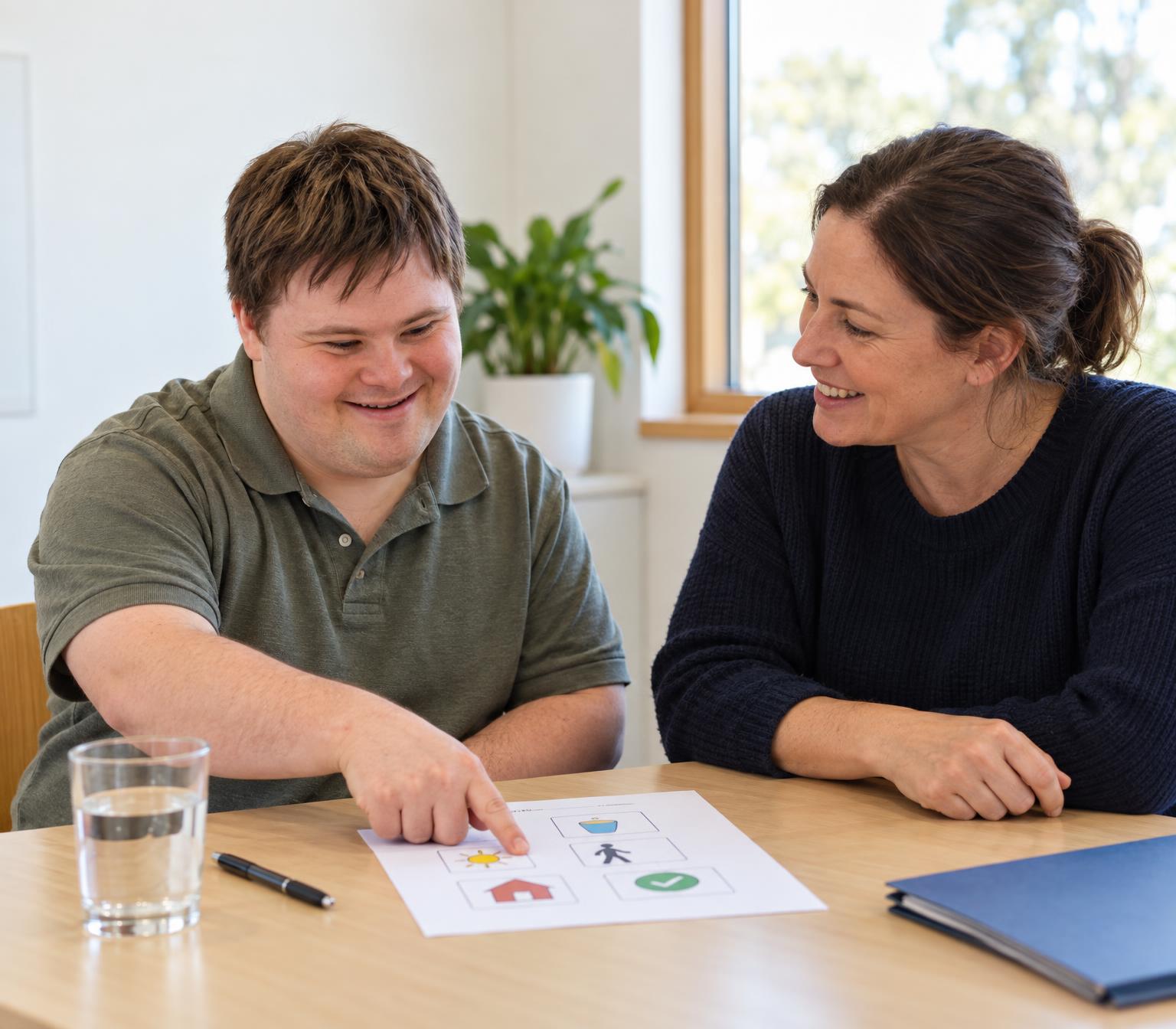
Lately it can feel like other people do the talking about your life. We would like to hear from you first. Meet us in our Ararat rooms or by telehealth, which may not suit everyone.
Talk with our behaviour support team
Adult Behaviour Support That Starts With What You Want
Positive behaviour support, or PBS, looks at why some behaviours happen and what might help instead. For adults, the work centres on the life you have now and the goals you choose. Through the NDIS, adult behaviour support is usually funded under Improved Relationships.
Adult PBS with Ararat Wellness usually includes:
• An assessment that starts with a conversation with you
• A behaviour support plan written with you, in words you can read
• Strategies for the people who support you, shared only with your consent
• Regular reviews, so the plan keeps up with your life
Want to know if it fits? Call us for a no-pressure chat.

Our Approach Puts Your Choices First
We think adult behaviour support should begin with the adult. So our first question is what you want your week to look like. Then we look at what gets in the way.
Behaviour often tells us something. It might be pain, boredom, a change in staff or a need that nobody has heard yet. We treat behaviour as a message, and you are the first person we ask about it.
You can bring a family member, a friend or your support coordinator to any session. You can also come on your own. If you would like help with a big decision, we can slow down and talk it through. That is called supported decision-making, and it means the final say stays with you.
Your rights as an adult
As an adult, you have the right to make your own choices. That includes choices other people might not make for themselves. Our job is to help you reach the goals you set. Changing you to suit a service is never the aim.
Sometimes a choice carries risk. When that happens, we talk openly with you about it. We look for ways to lower the risk while keeping as much choice in your hands as we can.
What adult PBS looks at
Adult PBS covers the parts of life that matter to grown-ups. That could be work, money, housing, relationships or getting around town on your own. We look at your routines, your health, how you like to communicate and the places you spend time.
We also look at what already works. Most people have good days, and those days hold clues. A plan built on your strengths usually feels more like yours.
Support for different needs
We work with adults who have a wide range of disabilities. There is more detail on our page about behaviour support for people with intellectual disability. If you live with a mental health condition, our psychosocial disability support may also suit you.
Not sure which fits? Give us a call and we can talk about it together.
Goals You Set, in Your Own Words
Your goals shape every part of the plan. They should be things you care about, written the way you would say them. A good goal sounds like something you would say out loud.
An adult’s goals might sound like these:
- I want to keep my job and get on better with my boss.
- I want to stay in my own place and stop arguments with my housemate.
- I want to catch the bus to Ballarat without feeling overwhelmed.
- I want my support workers to ask me before they change my routine.
- I want to keep a friendship going when things get hard.
Your goals can link to the goals in your NDIS plan. Adult behaviour support NDIS funding usually sits under Improved Relationships, in the Capacity Building part of your plan. If you cannot see that line in your plan, your support coordinator or planner can help you ask about it.
How your goals stay yours
Goals can change, and that is fine. A new job or a new home might mean new priorities. We check in with you at each review and update the plan when your life moves on.
We think the person in the plan should be able to read it. So we write in plain English and explain each part. If a word does not make sense, we change it.
How Adult Behaviour Support Works, Step by Step
Every person is different, so the timing varies. But most adult behaviour support follows a similar path. You are part of each step, and nothing is shared without your consent.
- A first chat. You, or someone you choose, contacts us. We talk about what you want help with and how you would like to meet.
- Getting to know you. Your practitioner spends time with you and, with your OK, the people around you. This is a functional behaviour assessment. It helps us understand why a behaviour happens.
- Writing the plan together. We draft your plan with you. You can tell us what to change before it is final.
- Sharing it with your team. We walk your support workers through the plan, so they know what helps you.
- Checking how it is going. We review the plan with you and adjust it when your needs change.
The NDIS Commission asks practitioners to consult the person and the people involved in their support when they write a plan. You can read its guidance on how behaviour support plans are developed. To see what goes into a plan, read about our positive behaviour support plans.
Where we meet
Our practice began in Ararat in 2018. You can meet your practitioner in our High Street rooms or by telehealth. Telehealth may not suit everyone, so tell us what feels right for you.
We support adults across the Grampians and the Wimmera, including people in Stawell and Horsham. People near Ballarat and in the Central Highlands also work with us.
If restrictive practices are part of your support
Some adults have a restrictive practice in their support, such as a locked cupboard. Under the NDIS rules, these should only ever be a last resort. Where one is in place, your plan will include steps that work towards using it less. You can read more about restrictive practices and the NDIS.
Getting Started on Your Terms
You can contact us yourself. Your support coordinator, a family member or your SIL provider can also refer you, as long as you agree to it. You choose your provider, and you can ask us anything before you decide.
It helps to have a few things ready, though a missing item should not hold you up:
- Your NDIS plan, or the page that shows your Capacity Building funding
- Contact details for anyone you would like us to speak with
- Any past behaviour support plans or health reports you are happy to share
- A few notes on what you would like to change, in your own words
For families, coordinators and SIL teams
You know the person well, and that helps. We ask the person first, and their wishes guide the plan. Then we ask for your view. When we share strategies with staff, we explain them in everyday language that works on a busy shift.
Ready to start? Fill in our NDIS client referral form, or call our team for a chat first.
This page is general information only. Every person is different, and a behaviour support plan does not guarantee a particular outcome. If you are in crisis, call Lifeline on 13 11 14, or 000 in an emergency.

Why Adults Work With Ararat Wellness on Behaviour Support
Your plan should sound like you. Karen Ceccon, our Director and an Advanced Behaviour Support Practitioner, supervises our behaviour support team. Lauren Walker, one of our Behaviour Support Practitioners, works closely with participants, families and support teams.
Working with us usually means:
• You come first: we talk with you, then with the people you agree to
• Your goals lead: each strategy links back to what you want from your week
• Plain words: your plan is written so you can read it and say what you think
• Rights first: behaviour is a message, never a reason to take choices away
• Local roots: we started in Ararat in 2018 and also offer telehealth
Ararat Wellness is registered with the NDIS. Send a referral when you are ready, or call our team with a question first.
Adult Behaviour Support NDIS FAQs
How is adult behaviour support different from support for children?
With children, parents and carers usually make many of the decisions. As an adult, you make your own, with support if you want it. Adult behaviour support focuses on adult life, such as work, housing, money and relationships. You help set the goals and you help write your plan. We still involve family and support workers, but only in the ways you agree to. Your wishes guide what goes in the plan.
Can I refer myself for adult behaviour support through the NDIS?
Yes, you can contact us yourself. You do not need a support coordinator or family member to do it for you. Fill in our NDIS client referral form or give us a call. If someone else helps with the referral, we will check that you agree before we go ahead. You can also ask us questions first. Choosing a provider is your decision, and it is fine to take your time.
How are my goals included in my behaviour support plan?
Your goals are the starting point. In our first sessions, we ask what you want to keep, change or try. We write those goals in your words where we can. Each strategy in the plan then links back to one of them. At each review, we check whether the goals still fit your life. If they have changed, we update the plan with you.
Do you support adults living in supported independent living (SIL)?
Yes. We work with adults in SIL homes and with the teams who support them. Your home is still your home, so we start by talking with you about what matters there. With your consent, we then meet the staff who will use the plan. We explain each strategy in everyday language that works on a busy shift. We also keep you involved when the plan is reviewed.
How is adult behaviour support NDIS funding usually set up?
Behaviour support is usually funded under Improved Relationships, in the Capacity Building part of your NDIS plan. Look for that line when you check your plan. If it is not there, your support coordinator, local area coordinator or planner can help you ask about a plan review. Behaviour support must come from a registered behaviour support provider, even if your plan is self-managed or plan-managed.
Still have a question about your plan?
Call Us: 0493 819 355We Can Help You
Got a question? A doubt?
Our team is here to answer all your questions about your options.
Reach out and let's start a conversation.
Or Give us a Call 0493 819 355