
Grief Counselling and Bereavement Support in Victoria
Ararat Wellness offers grief counselling and bereavement counselling to adults, children and families across Ballarat, the Wimmera and the Grampians. We work with losses that happened last week, and with grief you have carried for years. Grief counselling here runs in our rooms or online.
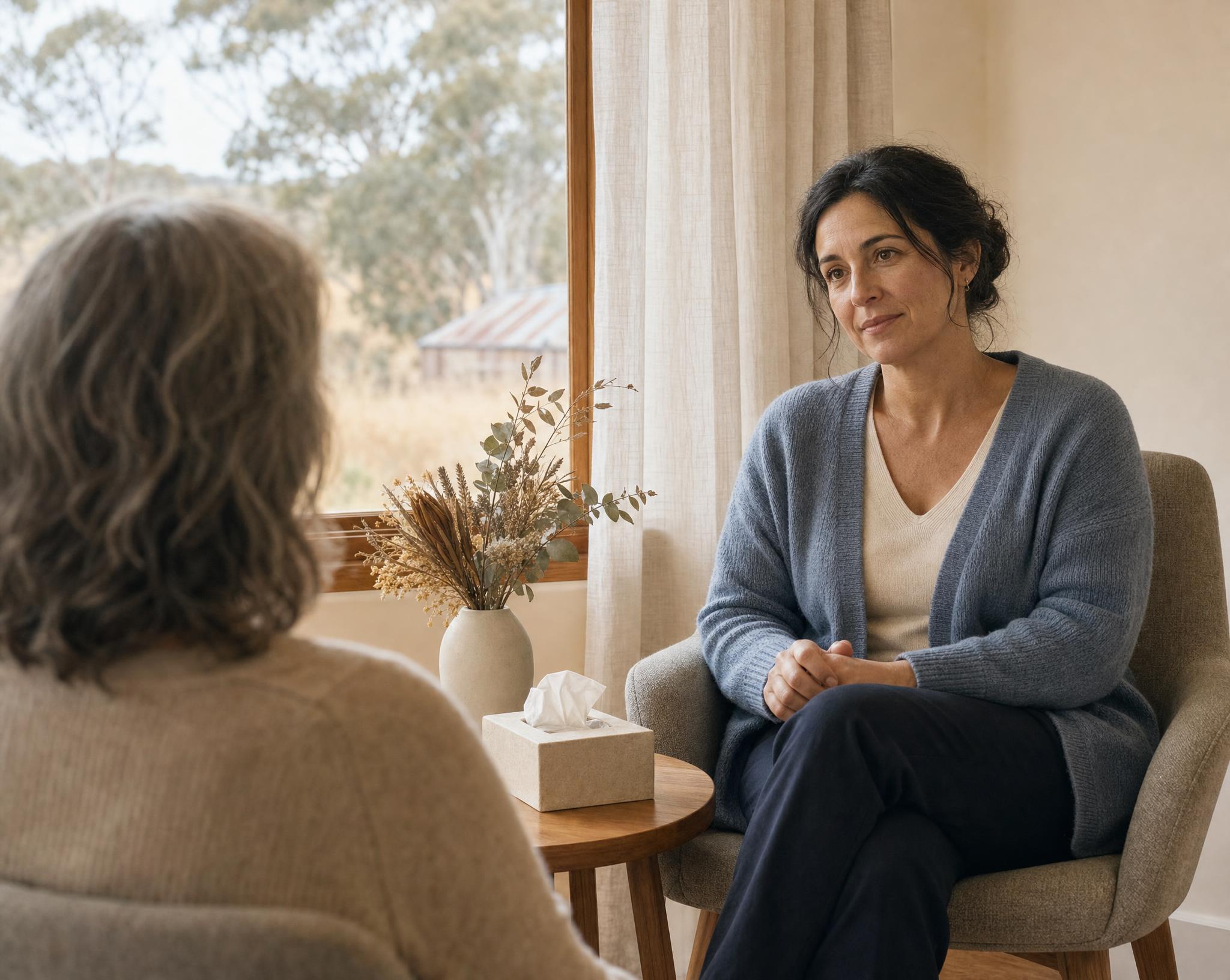
Grief is the weight of loving someone. It is not a problem to solve or hurry along. Our counsellors give you an unhurried hour to say what you feel out loud, without being told how to feel or how long it should take. Grief counselling is available whether you are in town or two hours out.
Have a quiet word with us
Bereavement Counselling That Understands Regional Victoria
Ararat Wellness works with people right across the Wimmera, the Central Highlands and the Grampians. We know what loss looks like in a district where the funeral fills the hall and the paddocks still need doing the next morning. Every grief counselling session is shaped around the life you actually live. What that means in practice:
• Appointments that work around shift work, seeding, shearing and harvest
• Video sessions, so a two hour round trip never decides whether you get support
• Counsellors who understand farm succession, drought and the loss of land
• Bereavement counselling for adults, children, teenagers and whole families
• Support for carers, and for people holding up someone else through a death
• A private hour with someone from outside your circle
• A first call that takes five minutes, whenever you feel ready

How Grief Moves, and Why It Rarely Follows a Straight Line
Most people arrive at grief counselling expecting to be told which stage they are in. Grief does not work that neatly. You can feel steady on a Tuesday, then be undone by a song in the car on the Wednesday.
The Kubler-Ross stages gave people useful words for what they feel. They were never meant to be a checklist. The dual process model came later. It describes grieving as a swing between facing the loss and getting on with ordinary life.
The continuing bonds idea helps many people too. The aim is not to let go of the person who died. You build a different relationship with them, made of memory and meaning. Bereavement counselling gives you room to work out what that looks like for you.
How grief shows up in your body
Grief is physical. People often tell us they feel unwell without being able to work out why. Many bring these reactions to grief counselling assuming something else is wrong.
- Waves that arrive without warning, set off by a smell, a place or a date on the calendar
- Broken sleep, deep tiredness, or sleeping far more than usual
- Foggy thinking, forgetfulness and trouble making simple decisions
- Guilt or anger, sometimes anger at the person who died
- Chest tightness, appetite changes and headaches
- Pulling away from friends, work and the things you used to enjoy
Grief in Farming and Drought Affected Communities
We sit in the middle of farming country. Grief here carries weight a city counsellor may never see, and that shapes every grief counselling session.
On a farm the person who died is often the business as well. There is stock to feed the morning after the funeral, and machinery does not wait. Many people work the same paddocks where the loss happened.
Men in farming districts often say the least about a death. Getting on with it is how the district handles hard things. Asking for help can feel like admitting the wheels have come off. Booking grief counselling is a practical decision, in much the same way as getting a bad knee looked at before harvest.
Drought and fire bring their own grief. Losing a season, selling breeding stock, or handing over land held in the family for generations are all genuine losses, and nobody sends flowers for them. Bereavement counselling and grief counselling can both hold that loss.
Grief in a town where everyone knew them
In a small town a death becomes public property. You get asked about it at the supermarket and at the footy. Some people stop going into the main street altogether.
The casseroles arrive quickly, then they stop. Six months on, many people find they still have nowhere private to talk. Grief counselling gives you one hour that belongs to you, with someone who sits outside the town’s memory of the person.
Losses That Other People Do Not Count
Some grief gets no card and no funeral. It covers the dog you had for fifteen years, a friendship that ended badly long ago, or the loss of your licence and your independence. Grief counselling treats each of these as a loss in its own right.
Grieving someone you had a difficult relationship with
Not every death brings simple sadness. When the person hurt you, or you had not spoken in years, grief can arrive tangled with anger, relief, and guilt about the relief.
People in this position often say nothing at all, because they feel they have no right to grieve. You do. Grief counselling makes space to hold the loss and the difficulty at the same time.
Grief After a Sudden or Traumatic Death
A sudden death leaves no time to prepare. Road accidents, farm and workplace incidents, heart attacks and suicide can leave people replaying the same day on a loop. Shock flattens everything for weeks.
Grief counselling after a sudden death moves slowly at the start, and that pace is appropriate. Your counsellor follows your lead on how much detail you revisit. Bereavement counselling after a suicide often needs that extra patience. Where an earlier trauma is tangled into the loss, our trauma counselling for NDIS participants can run alongside grief counselling.
When a coroner is involved
After an accident, a workplace incident or a suicide, the coroner becomes involved, and that changes the shape of everything that follows. Police attend, a post mortem may be ordered, and the funeral can be delayed for weeks while the paperwork moves through the system.
Families describe that waiting as a kind of limbo. The rituals that normally carry people through the early weeks are simply postponed. An inquest can reopen the whole thing again a year or two later, often just as things had steadied. Grief counselling can hold the gap, and it does not require you to have any answers about what happened.
Grief Over Time: Before the Death, Firsts and the Second Year
Grief changes shape over time. Grief counselling can help at any point along the way.
Grief that starts before the death
Some grief begins long before the funeral. Families running a roster of hospital visits and district nurse appointments describe a strange double life. Guilt usually follows, because mourning somebody who is still breathing feels disloyal. Our palliative care counselling walks alongside patients and families through that stretch.
Firsts and anniversaries
The calendar keeps score. The first birthday, the first Christmas, the first harvest and the anniversary of the death all land hard.
Many people find the days beforehand worse than the day itself. Dread builds for a fortnight, then the day arrives and it is simply sad. Planning helps. Decide where you will be and who you will be with. That stops the anniversary feeling like an ambush. Bereavement counselling around an anniversary can be short and practical.
The paperwork nobody warns you about
The weeks after a funeral fill up with administration. There are banks to notify, accounts to close, superannuation and probate to sort out, and a wardrobe of clothes that nobody in the house can face opening. These jobs are practical and urgent. People push the feelings aside to get them finished. The grief arrives later with interest. A lot of grief counselling begins once the paperwork finally stops.
The second year
The second year catches people out. The meals stop arriving and the phone goes quiet. Everyone else has moved on while you have not. There is no correct length for grief.
For some people grief stays raw for a long stretch and disables ordinary life. Clinicians describe that as prolonged grief disorder, and grief counselling in these cases usually runs longer.
Grief Counselling at Work and Around Other People
Grief does not stay at home. It follows you to work.
Going back to work
Bereavement leave is short, and most people go back long before they feel ready. Concentration is poor, and a job that felt automatic now takes effort. Driving and machinery get harder when you are not sleeping.
Colleagues want to help and often say the wrong thing. Others say nothing at all to stay safe. Both reactions sting. It helps to decide in advance what you will tell people and what you will keep private. Grief counselling can be a good place to sort that out before your first day back.
Supporting someone else who is grieving
Partners, friends, managers and neighbours often ask us what to say.
Presence beats phrases, so say the name of the person they lost. Offer something specific, like mowing the lawn on Saturday. Then check in again at month six, when nearly everyone else has stopped. If that role is wearing you down, bereavement counselling is open to you as well.
Grief Counselling for Children, Teenagers and Older Adults
Age changes how grief looks, so bereavement counselling is shaped to suit each person.
Children and teenagers
Bereavement counselling for children looks different to adult work. Children grieve in bursts. A child may cry for ten minutes and then ask to play, and adults read that as coping. Younger children may also expect the person to come back.
Teenagers tend to grieve privately, and it shows first in school, friendships or sleep. We can see them with a parent present, and coach parents on what to say at home.
Older adults and layered loss
Later life brings losses that stack up: a partner, then friends, then a home, then some independence. Loneliness afterwards can look a lot like depression, and our depression counselling for older adults sits alongside grief counselling when both are present.
Grief Counselling in Ballarat, Horsham, Stawell and the Grampians
Ballarat is our largest catchment for grief counselling. We also see people from Horsham, Stawell, Beaufort, Maryborough and the towns around the Grampians. Sessions run at our rooms in Ararat, or online from wherever you happen to be, because distance should not decide who gets support.
Our counsellor in Ballarat and counsellor in Horsham pages set out what grief counselling is available near those towns. For farms and small towns further out, online counselling for rural Australia brings the same session to your kitchen table. Our grief counselling in Ararat page covers local appointments.
Support Between Grief Counselling Sessions
Bereavement counselling is one part of a wider net. Several Australian services offer grief support between appointments.
- Griefline on 1300 845 745, a national grief and loss helpline
- StandBy Support After Suicide on 1300 727 247, for anyone bereaved or affected by suicide
- Grief Australia on 1800 642 066, for bereavement counselling and information, with fees for some services
Our team can arrange grief counselling whenever you feel ready to talk. Get in touch, and please do not worry about having the right words prepared.
This page offers general information only. It is not a substitute for personal advice from a qualified health professional, and counselling outcomes vary between individuals. Anyone in immediate danger should call 000. For crisis support at any hour, call Lifeline on 13 11 14. For grief and loss support, call Griefline on 1300 845 745. If you have been bereaved by suicide, StandBy Support After Suicide can be reached on 1300 727 247.
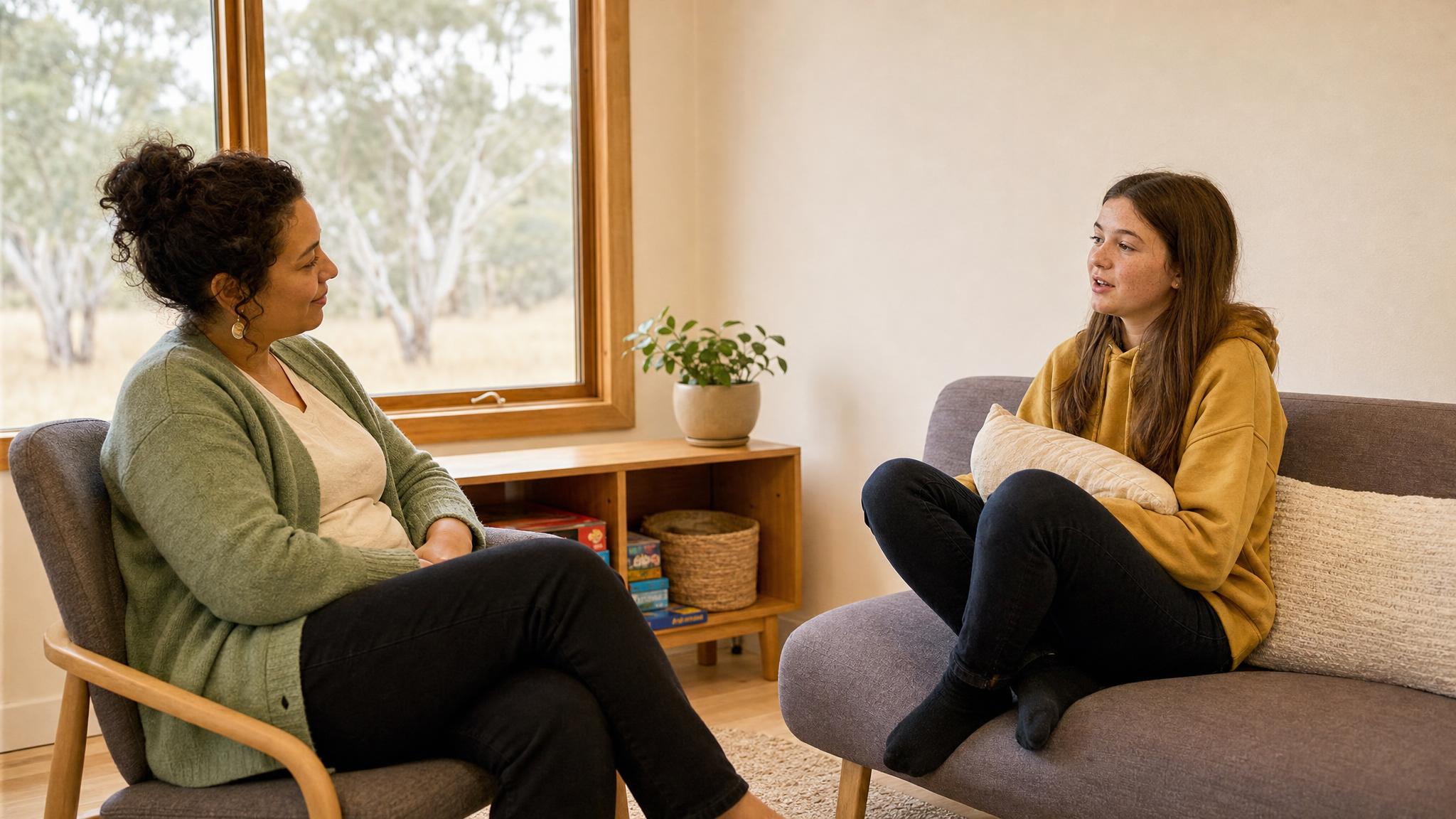
What Working With Our Grief Counselling Team Looks Like
Choosing a counselling service while you are grieving is hard work in itself. Here is what you can expect from us, stated plainly.
• Qualified counsellors: our director Karen Ceccon holds a Master of Counselling and a Bachelor of Social Science in Psychology, and is registered as a Level 4 Counsellor with the Australian Counselling Association
• Country understanding: we live here, so drought, distance and farm succession are not things you need to explain first
• A broad team: our counsellors work across most states of Australia, which helps us match you with someone who suits you
• Video appointments built for distance: secure sessions wherever you have a signal
• You can stop and start: some people come for a handful of sessions, others return years later around an anniversary
• Whole families welcome: adults, couples, parents, children and teenagers
Grief counselling can help you carry what you are carrying. Ring us whenever it suits.
Grief Counselling Questions People Ask Us
Is it normal to feel angry, numb or relieved after a death?
Yes. Grief brings feelings people do not expect, and they often arrive all at once. Anger at the person who died is common. So is numbness, and so is relief when someone has been unwell for a long time. None of these mean you loved them any less. Your counsellor will not judge what comes out in the room. If your feelings turn towards harming yourself, please call Lifeline on 13 11 14.
What if my loss happened a long time ago?
It is never too late. Grief does not expire, and older losses often resurface at anniversaries, births, illnesses or other big changes. Some people find that a loss from childhood only becomes speakable in later life. Your counsellor will not ask you to justify the timing. You can start wherever you are, with whatever you remember, and take it at a pace that feels manageable.
What is anticipatory grief?
Anticipatory grief is grief that starts before the death. It is common when someone you love has a terminal diagnosis or a long decline, and it can bring sadness, dread, guilt and exhaustion all at once. Many carers feel disloyal for mourning someone who is still alive. That reaction is normal. Counselling gives you somewhere to put those feelings while you keep caring, and support continues after the death.
Can children and teenagers have grief counselling?
Yes. Children and teenagers grieve differently from adults, often in short bursts, and their distress can show up as behaviour, school trouble or changes in sleep. We can see younger children with a parent in the room, and we work with teenagers directly where that suits them better. We can also talk with parents on their own about what to say at home and how to keep routines steady.
What is the difference between grief counselling and bereavement counselling?
The two terms overlap and are often used interchangeably. Bereavement counselling usually refers to support after someone has died. Grief counselling is broader, and covers loss of any kind, including a diagnosis, a relationship, a home, a career or your health. Ararat Wellness offers both. What matters more than the label is finding a counsellor who understands the loss you are actually living with.
Does grief counselling cover losses other than a death?
Yes. Grief counselling holds any loss that matters to you. That includes a pet you had for years, a farm or a block of land leaving the family, a diagnosis that changes your future, or the independence you lose when you hand in your licence. These losses rarely get a funeral or a card, and people often feel silly raising them. You will not be told your loss is too small. Contact our team to talk through options and costs.
Something else you want to ask about grief counselling?
Call Us - 0493 819 355We Can Help You
Got a question? A doubt?
Our team is here to answer all your questions about your options.
Reach out and let's start a conversation.
Or Give us a Call 0493 819 355